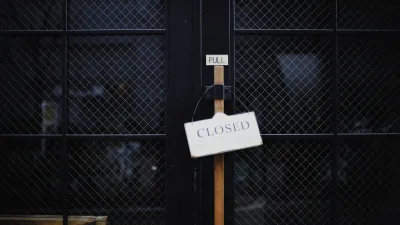
Hampshire College’s decision to wind down operations by December 2026 is not an isolated institutional collapse, but part of a widening pattern across small, tuition-dependent liberal arts colleges in the United States. Founded in 1965 as an experiment in self-directed learning, Hampshire now joins a growing list of institutions that have struggled to survive in an era of declining enrolments, rising costs and intensified competition for students.
Despite years of restructuring attempts—including debt refinancing, land asset sales and aggressive recruitment strategies—the college’s financial position deteriorated to a point where continuation was no longer viable. The closure decision follows similar outcomes at institutions such as Burlington College and Southern Vermont College, both of which shut down in the previous decade after facing comparable pressures of low enrolment and unsustainable debt structures.
A familiar pattern of financial fragility and enrolment decline
The immediate drivers of Hampshire’s closure mirror those seen across the sector: shrinking applicant pools, rising operating costs and increasing dependence on volatile revenue sources such as real estate assets and short-term fundraising campaigns.
This trajectory is not unique. Between 2020 and 2025, dozens of private nonprofit colleges either closed or merged in the United States, with financial distress and demographic decline consistently cited as key factors. Analysts have warned that institutions without large endowments or stable enrolment pipelines are particularly exposed to what is often described as the “enrolment cliff”.
In New England especially, small residential liberal arts colleges have been disproportionately affected, reflecting broader demographic shifts and a declining willingness among students to pay premium tuition fees for niche educational models.
The teach-out model and the managed ending of a campus era
Hampshire will now operate a structured “teach-out” phase, allowing remaining students to complete their degrees before the campus fully closes. Students will retain access to housing, advising and mental health services, while academic delivery will gradually shift away from full campus-based provision.
Transfer agreements with institutions such as Amherst College, Smith College and the University of Massachusetts Amherst are intended to soften the transition. However, such arrangements often expose underlying structural issues in student progression, particularly for institutions like Hampshire that use narrative evaluations rather than traditional grading systems.
This challenge is not unique. Similar transfer complexities were reported during the closure of other experimental colleges, where alternative assessment systems complicated credit recognition and student mobility.
Experimental models under pressure: Hampshire and its peers
Hampshire has long been associated with an unconventional academic philosophy—student-designed curricula, narrative evaluations and interdisciplinary learning without traditional majors. This model positioned the college alongside other experimental institutions in the U.S. liberal arts landscape.
Yet Hampshire is not the first institution of this kind to face existential pressure. Franconia College closed in the late 1970s after a similar period of declining enrolment and financial instability, while Marlboro College ended operations in 2020 and transferred its academic legacy to Emerson College.
More recently, smaller faith-based and niche liberal arts institutions such as Magdalen College of the Liberal Arts have also ceased operations, underscoring how vulnerable highly specialised or low-enrolment models can be in a competitive higher education market.
A sector-wide warning rather than a single institutional story
Industry estimates suggest that hundreds of U.S. colleges may face closure or merger pressure over the coming decade. The combination of declining birth rates, shifting student expectations toward career-oriented education, and post-pandemic financial strain has created a structural challenge for institutions reliant on traditional residential models.
Within this context, Hampshire’s closure is less a surprise than a signal. Even colleges with strong reputations for innovation are not insulated from financial arithmetic when enrolment falls below sustainability thresholds.
As one administrator noted, the core tension facing institutions like Hampshire is no longer philosophical but structural: how to maintain experimental educational missions in systems increasingly governed by financial viability.
What Hampshire’s closure reveals about the future of higher education
Hampshire’s winding-down process highlights a broader question facing higher education systems globally: whether alternative pedagogical models can survive without scale, endowment support or strong external partnerships.
While experimental colleges have historically played an outsized role in reshaping liberal arts education, their financial fragility raises doubts about their long-term viability in a market-driven system.
The closure also raises a deeper question for policymakers and educators alike: whether the current higher education ecosystem is capable of sustaining institutional diversity, or whether consolidation toward larger, more standardised universities is now structurally inevitable.
- Log in to post comments